

-min.png)






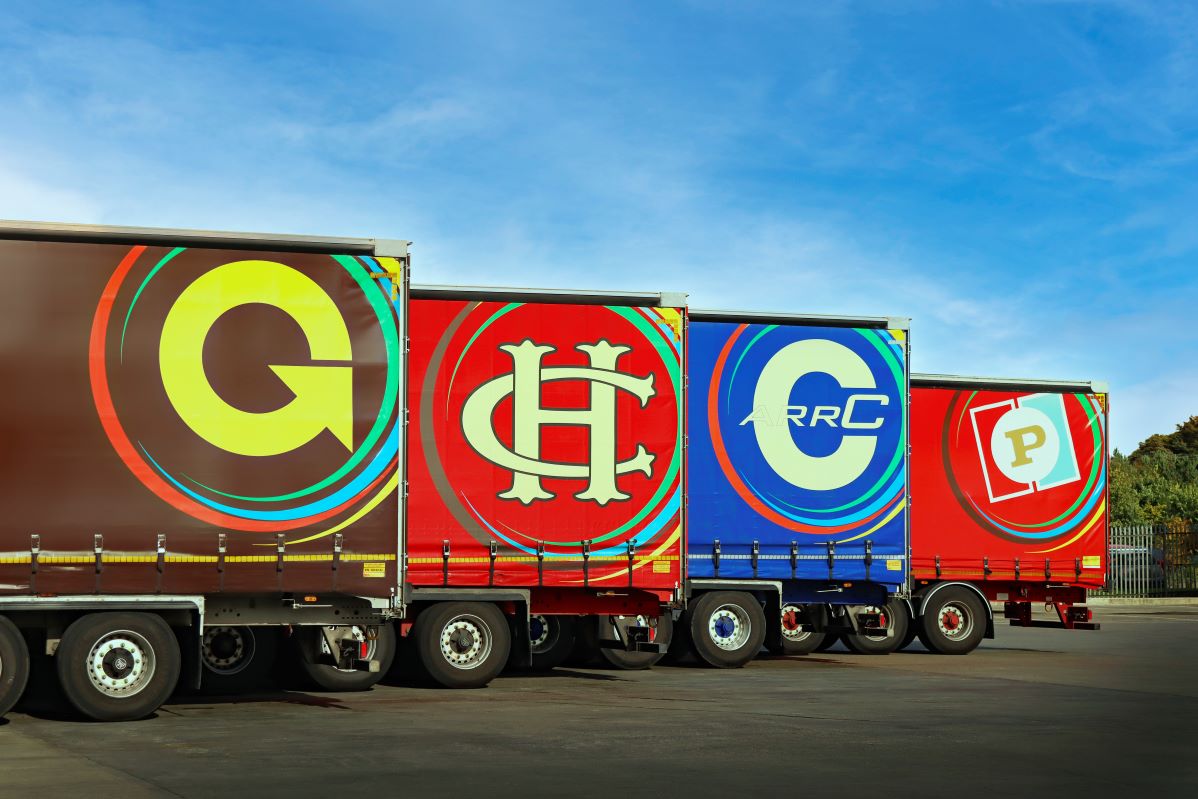


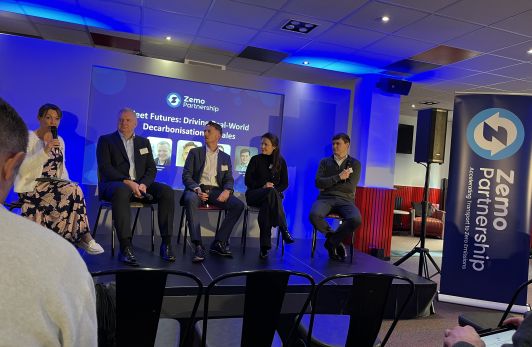
Annette Nemethova, our Group Sustainability Lead, recently spoke at a decarbonisation event hosted in Wales. We asked her about the event and what her key takeaways were.
Tell us about the event…
The “Moving to Zero” event, organised by Zemo Partnership and supported by the Welsh Government, marked the launch of a new programme to accelerate the decarbonisation of commercial vehicle fleets in Wales. The event brought together fleet leaders, government officials, vehicle manufacturers, and infrastructure providers for a day of collaboration and knowledge-sharing, all focused on turning net zero ambitions into practical action.
What key points did you share?
I provided practical insights into low-carbon fuels and strategies for fleet decarbonisation, with a particular emphasis on our Welsh operations in the dairy and agricultural sectors. This was an opportunity to showcase how Gregory Group is tackling these challenges in real-world conditions.
Our approach is multi-fuel, recognising that no single solution fits every use case. We’ve integrated LNG, CNG, HVO (Hydrotreated Vegetable Oil), and electric vehicles into our operations. In Wales specifically, HVO plays a key role as it is available on an indirect basis, supporting the sustainability goals of the Group and our customers in the region.
While electrification and, potentially hydrogen, are exciting long-term solutions, for many Welsh fleet operators, particularly the SMEs who rely more heavily on the second-hand market, a short-term plan needs to be considered. Currently, electric, LNG, and CNG vehicles are scarce on the second-hand market, which is why transitional fuels such as HVO make a more practical alternative.
My message was clear: start where you can, with what’s available, and build momentum towards net zero.
What opportunities do you see for Wales during the transition to net zero?
Wales faces several distinct challenges in fleet decarbonisation. Firstly, the limited second-hand vehicle market mentioned above. But in tandem with that is limited infrastructure.
It’s a classic chicken-and-egg scenario: infrastructure development is limited because there are too few vehicles to justify it, and vehicle adoption is slow due to the lack of supporting infrastructure.
This can subsequently heighten range anxiety for operators considering certain low carbon fuels.
And finally, for smaller operators, they may be faced with more expensive low-carbon fuels because they don’t have the purchasing power to buy fuel in bulk.
But, while there are challenges, there are also opportunities. Wales has a unique advantage in its dairy and agricultural sectors. These industries could become key players in generating biogas locally, supporting regional infrastructure for renewable fuels.
This would require significant collaboration and investment, but it’s a promising pathway that aligns with Wales’s strengths and sustainability ambitions.
What do you think the future of Welsh fleet decarbonisation looks like?
I would love to see a collaborative ecosystem where short-term actions (like adopting HVO and improving operational efficiency) are blended with long-term investments in infrastructure to support biogas, electric HGVs, and, potentially, hydrogen-powered vehicles in the future.
That would require the government, industry and local communities to come together, but if we can combine ambition with pragmatism, Wales can successfully “move to zero”.
Discover more about our sustainability offering and the renewable fuels we have in our fleet.